# First administrator setup
Source: https://docs.settlemint.com/docs/operators/user-guides/platform-setup/first-admin-setup
Create the first administrator account, deploy the organization, recover from interruption, and choose the next setup step.
## Overview [#overview]
The first administrator creates the organization, sets the currency model, and deploys the shared system infrastructure that later users, API keys, roles, compliance checks, and assets rely on. The setup path also defines how interrupted deployments resume and which operating task comes next.
## Prerequisites [#prerequisites]
* Access to the platform URL
* Email address for the administrator account
* ETH or native tokens for gas fees when your deployment uses public chains
## Process overview [#process-overview]
The first admin setup moves from account creation to organization deployment before it opens normal platform operations:
The flow has five working stages:
1. Create the administrator account.
2. Enter the organization name, supported target currencies, and base currency on one setup screen.
3. Start organization deployment.
4. Wait for the deployment progress screen to complete, or retry the same organization if setup fails before onboarding completes.
5. Choose whether to go to the dashboard, invite team members, or set up a PIN from account security.
Only the first user can initialize the organization. This setup creates the organization boundary and the platform
infrastructure used for identity, access control, compliance, system operations, and later asset workflows.
## What organization setup bootstraps [#what-organization-setup-bootstraps]
The setup screen creates the organization record, makes it the active organization for the first administrator, writes the currency settings, and starts the system deployment workflow for that organization.
The deployment creates or prepares the operating infrastructure that the organization needs before users and assets can work against it:
| Bootstrap area | Result |
| ------------------------ | --------------------------------------------------------------------------------------------------------------------------------------------------------------------------- |
| Wallets | Creates the administrator signing wallet when the account does not already have one, then provisions the smart wallet used for account-abstraction execution when enabled. |
| System contracts | Deploys the organization's system contract from the network directory factory and stores the active system address for the organization. |
| Registries and roles | Bootstraps identity, trusted-issuer, compliance, token-factory, and add-on registries, then grants the administrator the required system roles. |
| Identity | Registers the administrator's wallet in the organization's identity registry and links the identity needed for later role, KYC, and asset workflows. |
| Compliance and factories | Registers compliance modules, asset factories, add-on factories, and optional feed or paymaster infrastructure when the active network supports them. |
| Currency settings | Stores the base currency and target currencies. Exchange-rate feeds are created for selected target currencies other than the base currency when feed support is available. |
Creating an organization from **Admin** > **Organizations** only creates the organization record from a name. It does not collect currency settings or deploy the system infrastructure. Use the onboarding setup flow to bootstrap a usable organization.
## Required setup inputs [#required-setup-inputs]
| Input | Requirement | Why it matters |
| ----------------- | --------------------------------------------------------------------------------------------------------------- | --------------------------------------------------------------------------------------------------- |
| Organization name | Required, 32 characters or fewer. DALP derives the URL-safe organization slug from this name. | Creates the organization record and the first administrator's owner membership. |
| Target currencies | At least one target currency, with no duplicates. | Defines the currencies the organization can use for exchange-rate feed setup. |
| Base currency | Must be one of the selected target currencies. At least one selected target currency must differ from the base. | Defines the organization's base reporting currency and prevents a setup that would create no feeds. |
Use these inputs before starting deployment. Deployment starts only after the organization name and currency selection pass validation.
## Steps [#steps]
### Create the administrator account [#create-the-administrator-account]
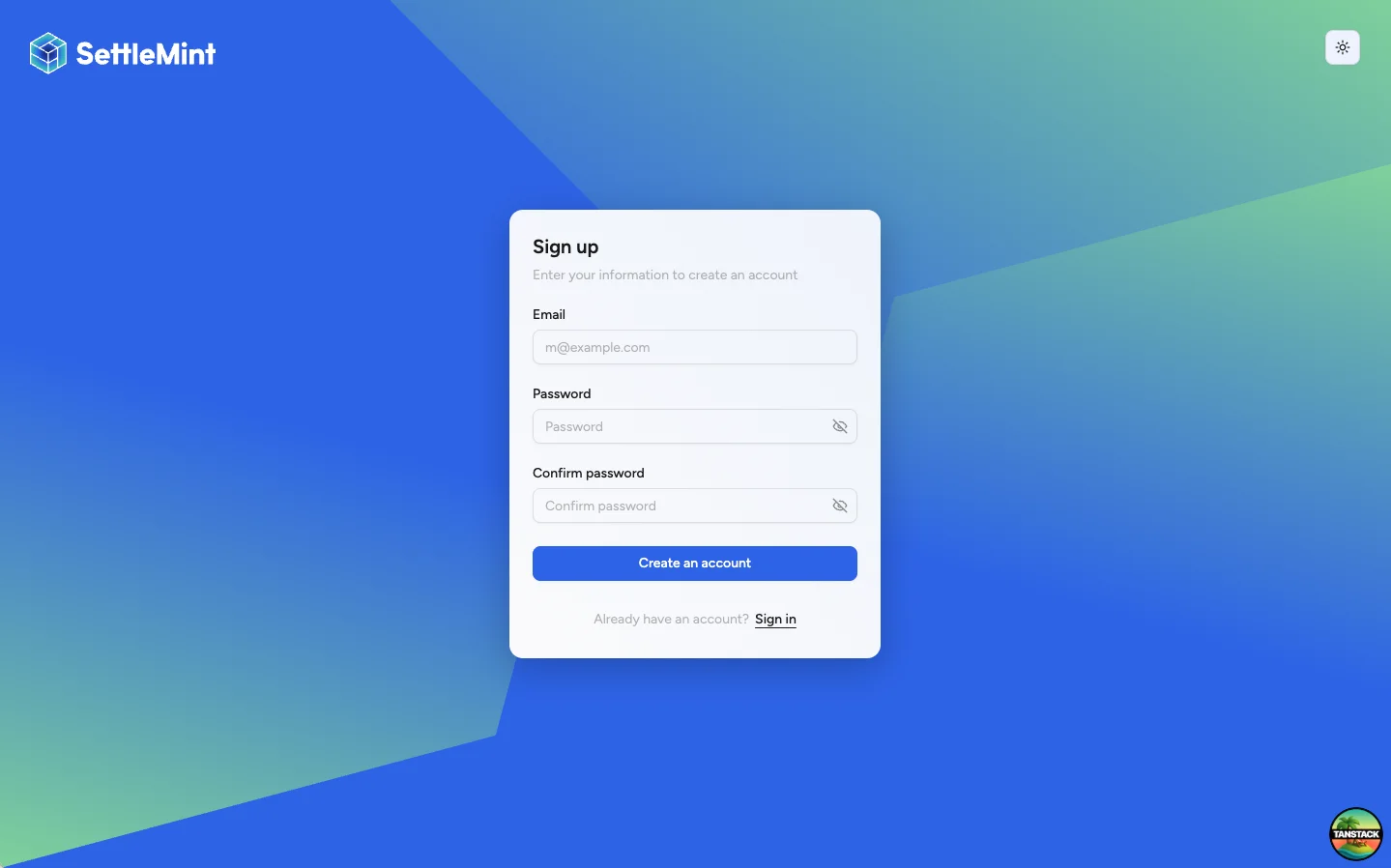
Navigate to your platform and select **Sign up**. Enter your email address and choose a strong password, then create the account.
### Open organization setup [#open-organization-setup]
After sign-up, continue to the organization setup flow. If you are not sent there automatically, open the setup path for creating a new organization.
The organization setup screen does not require an existing organization, completed onboarding, or PIN setup. Those controls are created or configured later in the flow.
### Enter organization and currency details [#enter-organization-and-currency-details]
Enter the organization name, choose the target currencies the organization will support, and choose a base currency from that selected currency set.
The target currency list must include the base currency and at least one non-base currency. DALP uses the exchange-rate provider's supported-currency snapshot when the snapshot is available. If that data has not loaded yet, the picker starts from the bootstrap currency list so setup can still proceed with a valid selection.
### Deploy the organization [#deploy-the-organization]
Select **Deploy Organization**. DALP starts organization deployment and shows a progress screen while the setup steps run.
Keep the browser session open until the deployment reaches the completion screen. The progress view reflects the organization deployment flow; you do not need to create a separate wallet or identity step in the setup wizard.
The progress screen streams a deployment tree. Status can move through wallet, system contract, registries, access roles, identity, compliance modules, asset factories, add-on factories, paymaster, and smart-wallet provisioning.
Exchange Rate Feeds appears only when the active chain Directory exposes feeds support. On chains without feeds support, the progress view omits the feeds step; it is not skipped and has not failed.
### Choose the next setup step [#choose-the-next-setup-step]
When deployment completes, choose the option that matches your next task:
* **Go to dashboard** to enter the platform.
* **Invite team** to add the first operators and approval users.
* **Set up PIN** to open **Account security** with PIN setup focused.
PIN and recovery-code setup live in **Account security**. They are not completed inside the organization deployment form.
## Completion and failure semantics [#completion-and-failure-semantics]
Setup is complete only after the deployment workflow finishes successfully and DALP marks the organization onboarding timestamp. After that point, the organization can invite users and enter the normal dashboard flow.
If deployment fails, the organization can be partially created. Completed on-chain and off-chain steps are not rolled back. DALP keeps the failed step details in the progress view, leaves organization onboarding incomplete, and offers retry when the same administrator can safely resume the bootstrap.
Retry uses the existing organization rather than creating a second organization. Owners and platform administrators can retry an incomplete organization. DALP refuses retry when onboarding has already completed or when another deployment is already active for the same organization.
Refreshing the browser during an active deployment reconnects to the active progress stream. If the previous run failed, returning to the setup flow shows the retry state instead of asking you to create a new organization.
## If setup is interrupted [#if-setup-is-interrupted]
Return to the same organization setup flow with the same administrator account. If your organization was created but deployment did not complete, DALP keeps the organization name locked and asks you to choose the currency details again before retrying deployment.
Do not create a second administrator account or start a separate organization unless your operator tells you to abandon the original setup. After setup completes, the flow sends you to the dashboard or the selected next step instead of offering another retry.
## Invited and transfer-ready users [#invited-and-transfer-ready-users]
Invited users join an already bootstrapped organization. Their onboarding validates the invitation, creates a wallet when needed, attaches or creates identity state for the organization's system, grants membership, and provisions a smart wallet when enabled. It does not deploy a new organization system.
Users are not transfer-ready just because they joined an organization. Transfers and mints still depend on the asset's compliance rules, trusted issuers, identity registration, and any required KYC or eligibility claims. See [Register user](/docs/operators/user-guides/user-management/register-user) for the transfer-readiness model.
## Next operating tasks [#next-operating-tasks]
After completing first admin setup, use the task that matches the next operator decision:
| Next task | When to use it |
| --------------------------------------------------------------------------------------------- | ----------------------------------------------------------------------------------------------- |
| [Set up account security](/docs/operators/user-guides/user-management/account-security) | Set the PIN and recovery codes if you did not choose **Set up PIN** from the completion screen. |
| [Invite team members](/docs/operators/user-guides/user-management/invite-users) | Add the first operators and approval users to the organization. |
| [Add administrative roles](/docs/operators/user-guides/platform-setup/add-admins) | Grant platform administration duties after the first admin exists. |
| [Configure trusted issuers](/docs/operators/user-guides/compliance/configure-trusted-issuers) | Prepare identity-based compliance checks before relying on asset rules. |
| [Create assets](/docs/operators/user-guides/asset-creation/create-asset) | Start token creation after the organization, roles, and compliance dependencies are ready. |
| [Equity tokenization runbook](/docs/operators/user-guides/runbooks/equity-tokenization) | Follow a longer operating path that combines setup, compliance, asset creation, and servicing. |
## Related setup references [#related-setup-references]
* [Organization deployment API](/docs/developers/developer-guides/platform-setup/organization-deployment-api) covers the API equivalent of organization deployment.
* [Platform setup overview](/docs/operators/user-guides/platform-setup/platform-overview) explains the broader platform setup sequence around first admin setup.
* [Register user](/docs/operators/user-guides/user-management/register-user) explains why invited users still need identity and compliance readiness before transfers.
## Troubleshooting [#troubleshooting]
| Issue | Solution |
| ------------------------------------- | --------------------------------------------------------------------------------------------------------------------------------------- |
| Organization name is already taken | Choose a different organization name or ask your operator whether an earlier setup attempt already created the organization. |
| Cannot choose the base currency | Select target currencies first. The base currency must be one of the selected target currencies. |
| Deployment fails | Retry from the same setup flow if the screen offers a retry button. Otherwise contact your operator with the displayed error reference. |
| Setup completed but PIN is not set up | Open **Account security** and set up the PIN from there. |