

DALP solution model
Digital Asset Lifecycle Platforms (DALPs) provide regulated digital asset operations infrastructure for asset control, compliance-aware transfers, settlement coordination, and operating evidence.
A Digital Asset Lifecycle Platform, or DALP, is infrastructure for operating regulated digital assets after the first token is created. The platform connects asset creation, holder controls, role-based administration, custody-routed signing, settlement workflows, servicing actions, and indexed records. That gives institutions one operating layer for the full asset lifecycle.
Token issuance is only one part of the operating problem. A regulated programme needs to know who may hold or transfer an asset, which roles may act, how settlement is coordinated, what happened on-chain, and which systems still own cash, custody, legal, accounting, and reporting work. DALP gives that lifecycle a common platform surface.
Key terms
- DALP: Digital Asset Lifecycle Platform for governed digital asset operations.
- Atomic operations: Transaction patterns where the relevant on-chain state changes complete together or do not complete.
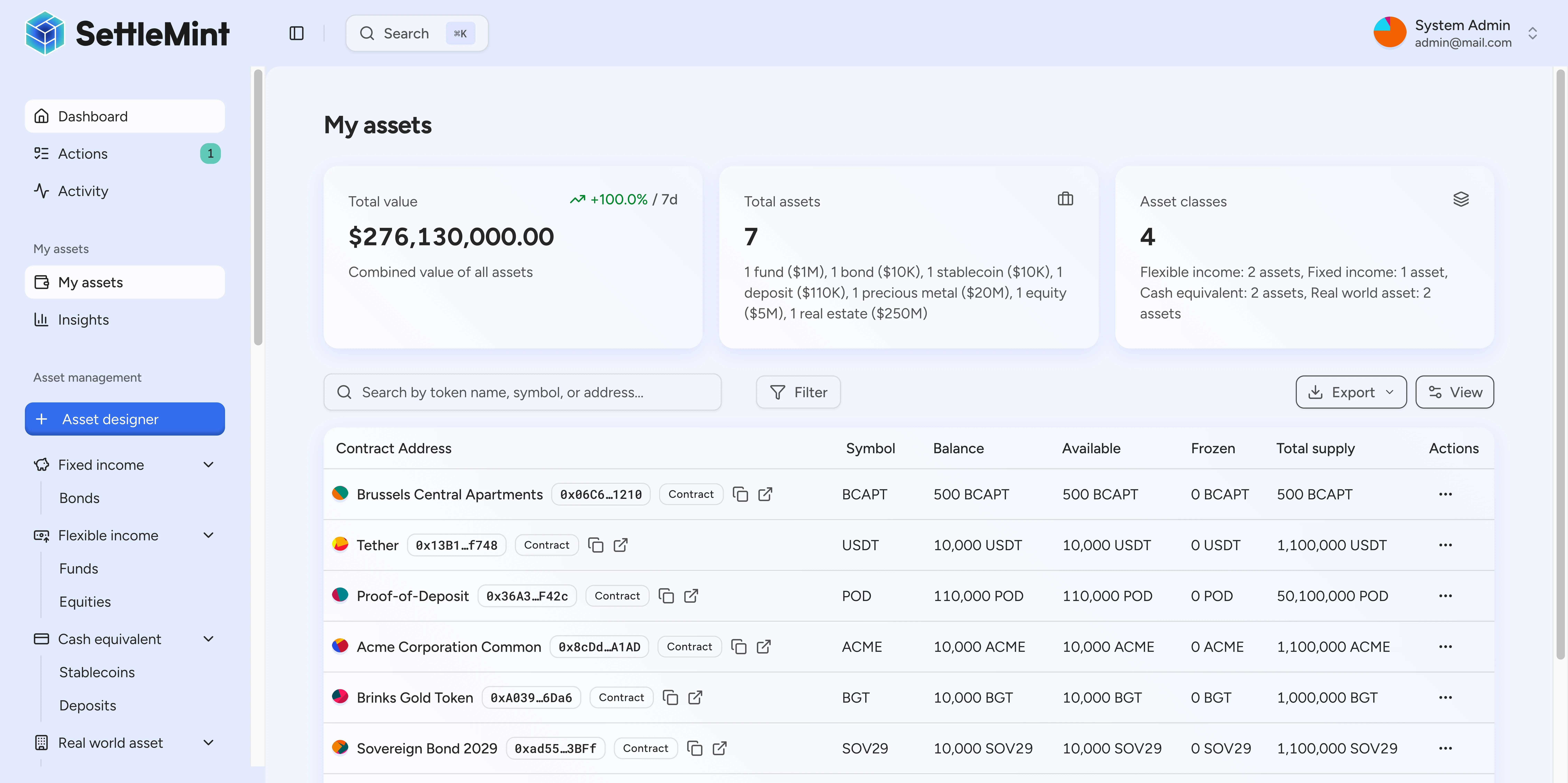
- Registry: The platform record used to inspect ownership, roles, compliance state, transactions, and related operating evidence.
- DvP: Delivery versus payment, where asset-side and payment-side actions are coordinated to reduce settlement mismatch.
- XvP: Exchange versus payment settlement for coordinating token exchanges through a platform workflow.
What makes a platform a DALP
A DALP is different from a token factory or a single workflow tool. It brings the lifecycle phases of a regulated asset into one architecture:
- asset modelling and issuance
- holder onboarding and eligibility checks
- role-controlled minting, burning, pausing, forced actions, and servicing
- custody-routed signing and approval workflows
- DvP or XvP settlement coordination when the programme uses tokenized payment or exchange legs
- indexed records for transactions, holders, events, exceptions, and downstream integration
Traditional programmes often split those responsibilities across issuance tools, compliance providers, custody systems, spreadsheets, settlement scripts, and reporting exports. Every split creates a reconciliation question: which system is current, which approval applied, and which record should an operator or auditor trust?
A DALP reduces that fragmentation by keeping the digital asset lifecycle inside one product architecture. The platform still integrates with external providers and institutional systems where the programme needs them.
The six operating principles
These principles are the practical checklist for deciding whether a platform can support institutional digital asset operations.
1. Shared lifecycle core
Issuance, holder controls, compliance checks, role changes, token actions, and indexed records should work from the same lifecycle model. Operators should not need one tool to see ownership, a second tool to understand eligibility, and a third tool to explain why a transaction succeeded or failed.
DALP supports this model through governed EVM tokens, compliance-aware transfer controls, role-scoped operations, system addons, API surfaces, and indexed event records. Teams inspect asset state through the platform record. That record does not replace every legal register, payment ledger, or accounting system.
2. Compliance-aware transfers
Regulated assets need checks before a transfer executes, not only exception reports after the fact. DALP supports identity-bound and token-specific controls so an asset can require holder eligibility, trusted claim issuers, role permissions, transfer approval, or other configured modules before movement is allowed.
The institution still owns the policy decision: which claims matter, which providers are acceptable, which jurisdictions are in scope, and who approves exceptions. DALP provides the technical enforcement points and the records needed to inspect those decisions in the asset workflow.
3. Custody-routed operations
Institutional asset actions usually require more than a private key. DALP separates platform roles, approval surfaces, and signer integrations so operators can route high-value actions through the required custody or wallet model.
This can include platform-managed wallets, external custody integrations, approval queues, and role-based controls. The custody provider or institution remains responsible for key-management procedures, hardware policy, account recovery, and operational approvals outside the platform.
4. Settlement coordination
DALP supports settlement workflows that coordinate asset-side and payment-side or exchange-side actions. XvP settlement is the current public pattern for coordinating token exchanges in one workflow; DvP scenarios use the same principle when the payment leg is represented by a compatible tokenized cash or payment asset.
The platform can coordinate the on-chain workflow and expose the resulting records. DALP does not by itself make off-chain cash final, replace bank-core posting, prove reserve backing, or operate an external market venue.
5. Enterprise deployment and control
A regulated programme must fit the institution's operating model. DALP documentation covers deployment topology, self-hosting prerequisites, observability, API integration, role management, and supportable integration patterns so architects can map the platform into their environment.
Deployment choices still carry institution-owned work: hosting policy, network access, backup and recovery objectives, identity-provider configuration, security monitoring, credential governance, and incident response.
6. Operator and developer evidence
A lifecycle platform must be operable. DALP exposes product documentation, API and SDK surfaces, dashboards, event history, transaction status, and integration records so teams can build workflows and investigate exceptions without treating the blockchain as a black box.
Good evidence is specific: the token action, the actor or role, the transaction or workflow status, the holder or asset involved, and the next system that must reconcile or act. DALP provides the platform records. The institution decides how those records become evidence packs, regulatory submissions, client reports, or internal controls.
How the architecture differs from point solutions
Multi-system tokenization stack
In a point-solution stack, every handoff becomes an integration and reconciliation problem. Teams must prove that the asset state, eligibility state, custody action, settlement status, and reporting record all describe the same event.
DALP lifecycle layer
The DALP model keeps the asset lifecycle inside one platform layer while making the external responsibilities explicit. That is the point: reduce fragmentation without pretending the platform replaces legal approvals, custody operations, payment rails, reserve controls, or accounting systems.
When to use a DALP
Choose a DALP when the programme needs:
- regulated asset issuance with holder eligibility and auditability
- multiple asset classes or instrument templates on the same lifecycle model
- role-based minting, burning, pausing, forced actions, and servicing
- custody-routed approvals or wallet integrations
- DvP or XvP settlement coordination for compatible tokenized legs
- APIs, SDKs, event history, and operator views for downstream systems
- deployment and observability patterns that fit enterprise controls
A narrower tool may be enough when you are running a simple proof of concept, issuing a single unrestricted token, or accepting manual reconciliation and off-chain exception handling.
What to ask before a tokenization project
Use these questions to test whether a platform fits the lifecycle problem:
- Where is the asset state inspected? Can operators see ownership, roles, transfers, and compliance-related records through one platform surface?
- Which controls run before transfer execution? Are eligibility and role checks part of the transaction path, or are they reviewed later?
- How are custody approvals handled? Can asset actions route through the required signer, wallet, or approval model?
- What settlement workflow is supported? Can asset and payment or exchange legs be coordinated, expired, cancelled, and inspected?
- Which systems stay external? Cash movement, reserve evidence, accounting, legal registers, market operation, and client communications need named owners.
- What evidence can an operator export or inspect? Look for transaction status, event history, holder records, API responses, and exception reasons.
Where to next
- DALP overview: How SettleMint's Digital Asset Lifecycle Platform implements this model.
- Architecture overview: The system context for platform components, deployment, integrations, and trust boundaries.
- Use cases: How the lifecycle model maps to fixed income, equity, funds, cash, real assets, and structured products.
- XvP settlement overview: The settlement coordination workflow for token exchanges.
- Glossary: Definitions for DALP, DvP, registries, roles, claims, and lifecycle terms.
Digital asset lifecycle platform
A guide to what a digital asset lifecycle platform does, how DALP supports regulated tokenized assets, and which product surfaces cover issuance, compliance, settlement, servicing, integration, and evidence on EVM-compatible networks.
Platform capabilities
DALP combines issuance, compliance, custody controls, settlement, servicing, exception handling, and operating evidence in one platform for regulated digital asset operations after launch.