

Asset tokenization
Learn what asset tokenization means in DALP, how regulated EVM asset workflows connect lifecycle controls, compliance, custody-routed signing, settlement, and audit evidence.
Asset tokenization turns the operating record for an asset into controlled digital tokens. DALP applies that model to regulated EVM-based assets, where token issuance, roles, holder eligibility, custody-routed signing, settlement workflows, and audit evidence need to stay connected.
Start here if you need the business and architecture model before moving into the DALP solution, architecture overview, signing flow, or operator guides.
In DALP, tokenizing an asset connects token creation to the operating controls around that asset. The platform keeps issuance rights, holder eligibility, pre-transfer compliance checks, custody-routed signing, settlement coordination, and operator evidence together, so each regulated EVM asset moves through a governed lifecycle instead of an isolated token record.
Key concepts
Before continuing, understand these DALP concepts:
| Concept | Meaning in DALP |
|---|---|
| Digital token | A programmable record for ownership rights, claims, or lifecycle state on a configured EVM-compatible network. |
| Compliance control | A configured rule that can check identity, role, issuer, jurisdiction, or token policy before a controlled operation executes. |
| Operating record | The asset history DALP exposes through platform records, workflow state, EVM transactions, contract events, indexed reads, APIs, and reports. |
| Settlement workflow | A coordinated asset and payment-side process, such as XvP, where DALP controls the token leg and the institution owns the selected payment, custody, and external process setup. |
For complete definitions, see the Glossary.
What asset tokenization means
Tokenizing an asset represents ownership rights, claims, or operating records as digital tokens on a blockchain. The token becomes the programmable record the platform can issue, transfer, pause, burn, restrict, and service through configured roles and compliance controls.
For an institution, the point is not that every asset becomes freely tradable. The real gain is that the operating record moves from spreadsheets, disconnected registries, and manual approval chains into a controlled digital asset workflow. DALP keeps that workflow on configured EVM-compatible networks, with issuer roles, wallet controls, identity checks, and transaction history attached to the asset lifecycle.
The legal meaning of the token still comes from the instrument, issuer documents, investor terms, custody setup, and applicable regulation. DALP supplies the platform controls that make those decisions executable and auditable.
Why businesses care
Fewer disconnected operating records
Traditional asset operations often split the source of truth across transfer-agent records, fund administration files, custody approvals, payment instructions, and reconciliation spreadsheets. Every split creates delay and review work.
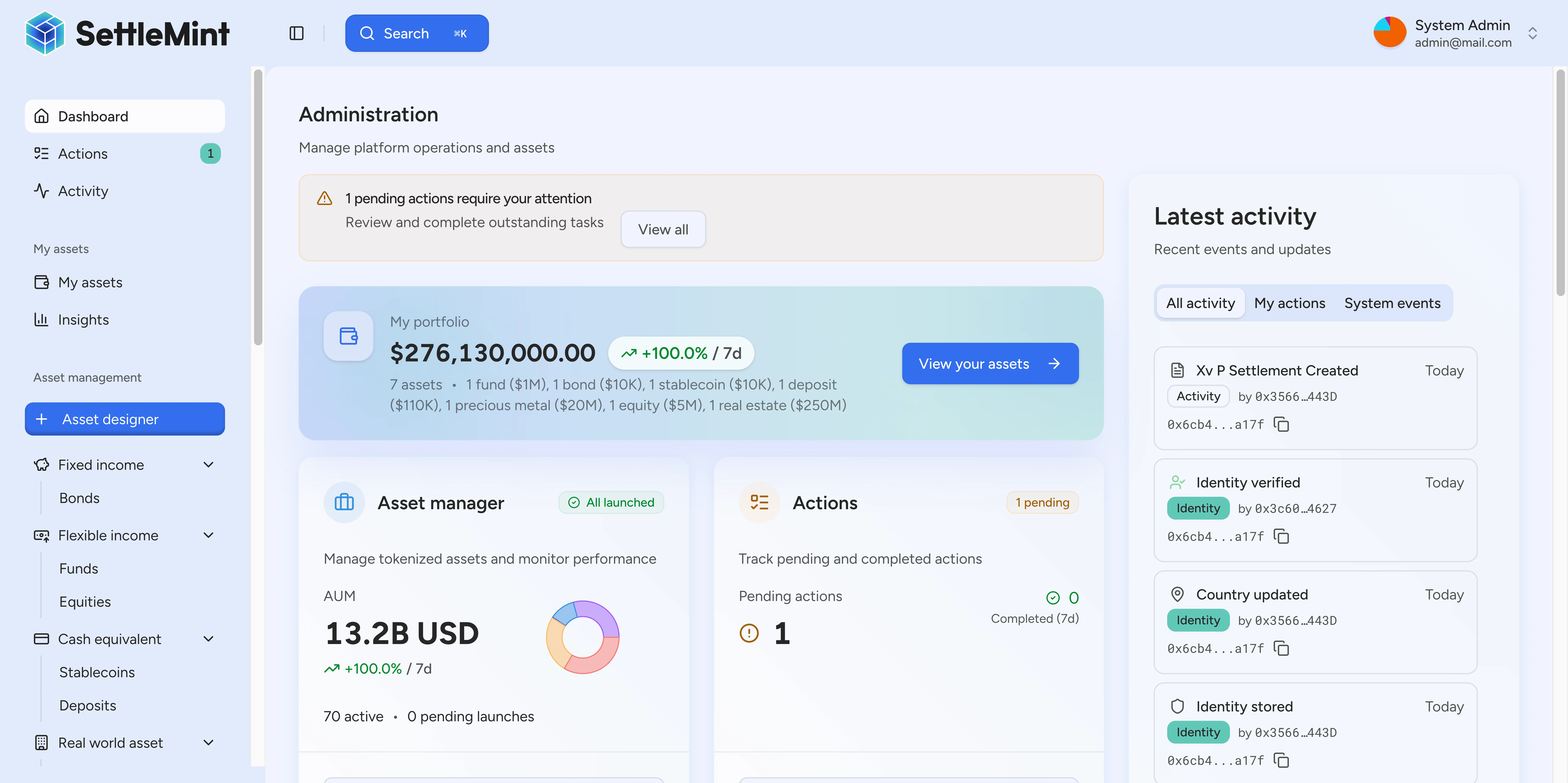
DALP gives you one platform surface for the asset lifecycle: create the asset, assign roles, verify participants, enforce transfer rules, service the asset, track transactions, and expose records through APIs and events. The result is not magic liquidity. The gain is a cleaner operating model where the platform records who can do what, which rules apply, and what happened.
Controlled secondary activity
Private assets, fund units, debt instruments, and precious-metal interests do not become unrestricted instruments because they are tokenized. Eligibility checks, transfer restrictions, lockups, jurisdiction rules, and issuer approvals still matter.
Tokenization helps when those controls are built into the transaction path. DALP can apply identity-based transfer restrictions, role-based administration, custody-routed signing, and XvP settlement workflows so approved movements can proceed with less manual checking while blocked ones fail before execution.
Operational automation through lifecycle management
Many lifecycle events are repetitive: minting, burning, forced transfers, pauses, distributions, settlement steps, role changes, and holder-record updates. DALP turns these into governed platform operations instead of one-off manual processes.
Examples in practice:
- Issuance and minting: approved operators create assets and mint supply under per-asset roles.
- Holder eligibility: compliance modules can restrict transfers to eligible and verified participants.
- Settlement: local and hashlock-based XvP workflows coordinate asset and payment-side steps.
- Asset servicing: operators can manage burns, pauses, forced transfers, yield schedules, and record updates when the asset configuration supports them.
Built-in compliance controls
DALP places compliance checks in the asset workflow instead of treating them as a separate after-the-fact review. Before a controlled transfer executes, the platform can check identity status, trusted issuers, claim requirements, holder restrictions, and token-specific compliance modules.
These controls do not replace legal review, regulatory permissions, or the institution's own decisions. They make approved rules enforceable in the platform and create records that auditors and downstream systems can inspect.
Market momentum
Institutional tokenization is moving from isolated pilots toward production operating models. The pattern is clear: institutions want digital asset workflows that keep policy, custody, compliance, settlement, reporting, and an auditable record connected.
The hard part is no longer creating a token. The hard part is doing it without fragmenting the stack. A production programme needs asset creation, participant controls, custody policy, settlement workflows, monitoring output, APIs, and an operating audit record to fit together.
What institutions need for production programmes
Unified infrastructure
Tokenizing assets at an institutional level requires more than token contracts. The operating platform must connect asset creation, identity controls, eligibility checks, custody-routed signing, transaction tracking, settlement workflows, and reporting. You get those capabilities as one connected surface, not as separate systems to integrate.
Embedded compliance
Compliance checks must run before controlled transfers execute. When eligibility rules sit in the transaction path, the platform blocks movements before ownership changes. You do not rely on a later audit to catch an ineligible transfer.
Custody and signing controls
Institutional wallets need approval policy, key governance, recovery procedures, and signer availability that match the deployment's risk model. DALP supports signer and custody integration paths, while the institution owns the chosen custody policy.
Coordinated settlement
Token movement and payment-side movement often sit in different systems. DALP supports settlement workflows such as XvP so parties can coordinate asset and payment steps with clear local execution and external process ownership.
Enterprise deployment controls
Banks and regulated operators need clear runtime responsibilities, access controls, observability, backup, data residency, and incident paths. You can deploy DALP through managed, customer-hosted, or hybrid patterns, with the exact responsibilities defined by the deployment model.
Why this matters
Tokenization only becomes useful in production when the lifecycle is governed end to end. Issuers need to know who can create an asset, who can change supply, who may hold or transfer it, how settlement is coordinated, and where the audit record sits after the event.
DALP provides the platform layer for that governed asset programme on configured EVM-compatible networks. If you are moving from isolated token experiments to controlled asset operations, the platform handles each stage so your programme does not become a custom build project.
Where to go next
- Read Market challenges for the operating problems that make tokenization hard.
- Read DALP overview for the product model, platform capabilities, and deployment choices.
- Read DALP solution for how the platform connects lifecycle controls.
- Read Use cases for asset-class examples and what the institution still owns.
- Read Deployment topology for runtime zones, custody boundaries, data ownership, and EVM network responsibilities.
- Read Glossary for unfamiliar terms.
Business documentation
Choose the right DALP business guide for evaluation, market context, use-case routing, compliance posture, market data infrastructure, terminology, and legal notices before an architecture review.
Institutional requirements for digital asset infrastructure
Institutional digital asset programmes require operating controls after the first token is issued: lifecycle control, compliance enforcement, custody-routed signing, settlement coordination, servicing, deployment choice, and audit evidence.