

Key flows
Index of the main DALP system flows, covering shared platform operations, asset lifecycle capabilities, feed updates, and settlement workflows with links to detailed walkthroughs.
DALP's key flows show how a request moves from an operator or API client into orchestration, signing, on-chain enforcement, indexing, and evidence surfaces.
Use this index to find the flow that matches the operation you are reviewing. Each linked page explains the sequence, control points, failure handling, and related components. For field-level detail, use the API or contract reference pages.
Related pages: Architecture map, System context, Lifecycle after issuance, Flows section, and Components.
Platform flows
These flows represent core platform operations. Every asset lifecycle change depends on one or more of them.
| Flow | Trigger | Outcome | Key components |
|---|---|---|---|
| Signing flow | Any state-changing operation (transfer, mint, redeem) | Transaction signed by custody provider and confirmed on-chain | Execution Engine, Transaction Signer, Key Guardian, Custody Provider (DFNS/Fireblocks), Chain Gateway, SMART Protocol compliance engine |
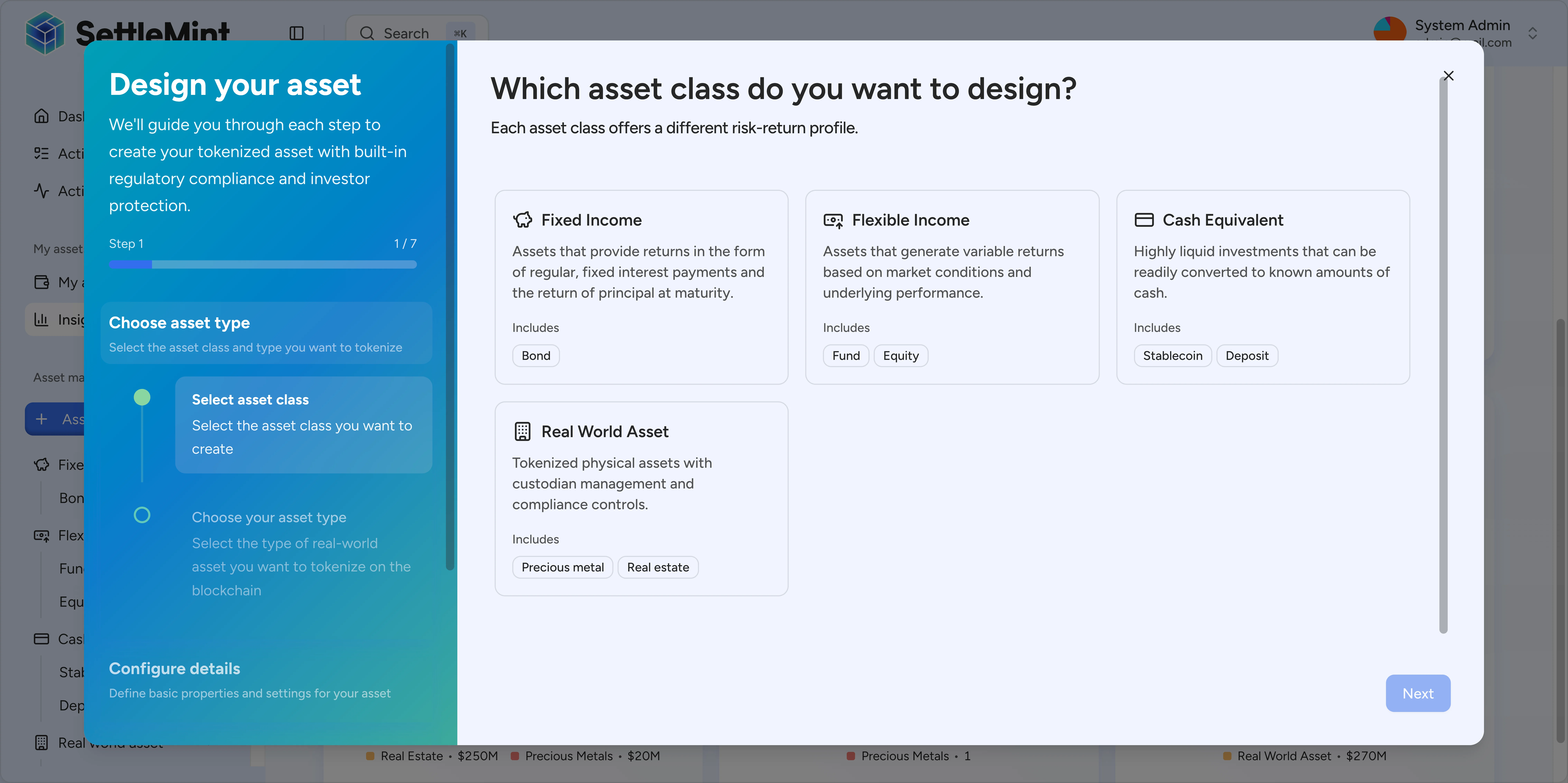
| Asset issuance | Issuer creates a new tokenized instrument | Asset contract deployed with compliance rules, identity requirements, and optional features configured | Asset Console/API, Execution Engine, Factory Registry, System layer, SMART Protocol |
| Compliance transfer | Token holder initiates a transfer | Transfer completes if identity and compliance rules pass; reverts otherwise | SMART Protocol compliance engine, Identity Registry, Compliance Modules |
| Feeds update flow | Issuer signer or oracle operator publishes a value | Signed price or oracle data is validated, stored, indexed, and made available to consumers | Feed contract, Feeds Directory, Transaction Signer, Chain Indexer |
Capability flows
These flows represent specific asset lifecycle capabilities that issuers configure per instrument. They reuse the platform flows above. They do not bypass signing, compliance, or indexing controls.
| Flow | Trigger | Outcome | Key components |
|---|---|---|---|
| DAIO offering | Issuer creates a Digital Asset Initial Offering | Verified investors participate atomically through settlement-currency exchange for digital assets with optional lock-up | DAIO Module, Compliance Layer, Settlement Engine, Custody Accounts |
| Airdrop distribution | Issuer initiates token distribution to a set of recipients | Tokens distributed to eligible addresses according to the configured strategy | Airdrop Addon, Compliance Layer, Identity Registry |
| Treasury distribution | Scheduled interval or lifecycle event (coupon date, maturity) | Settlement currency distributed from asset treasury to eligible investors proportional to holdings | Asset Treasury, Payment Features (Yield/Coupon/Redemption), Compliance Layer |
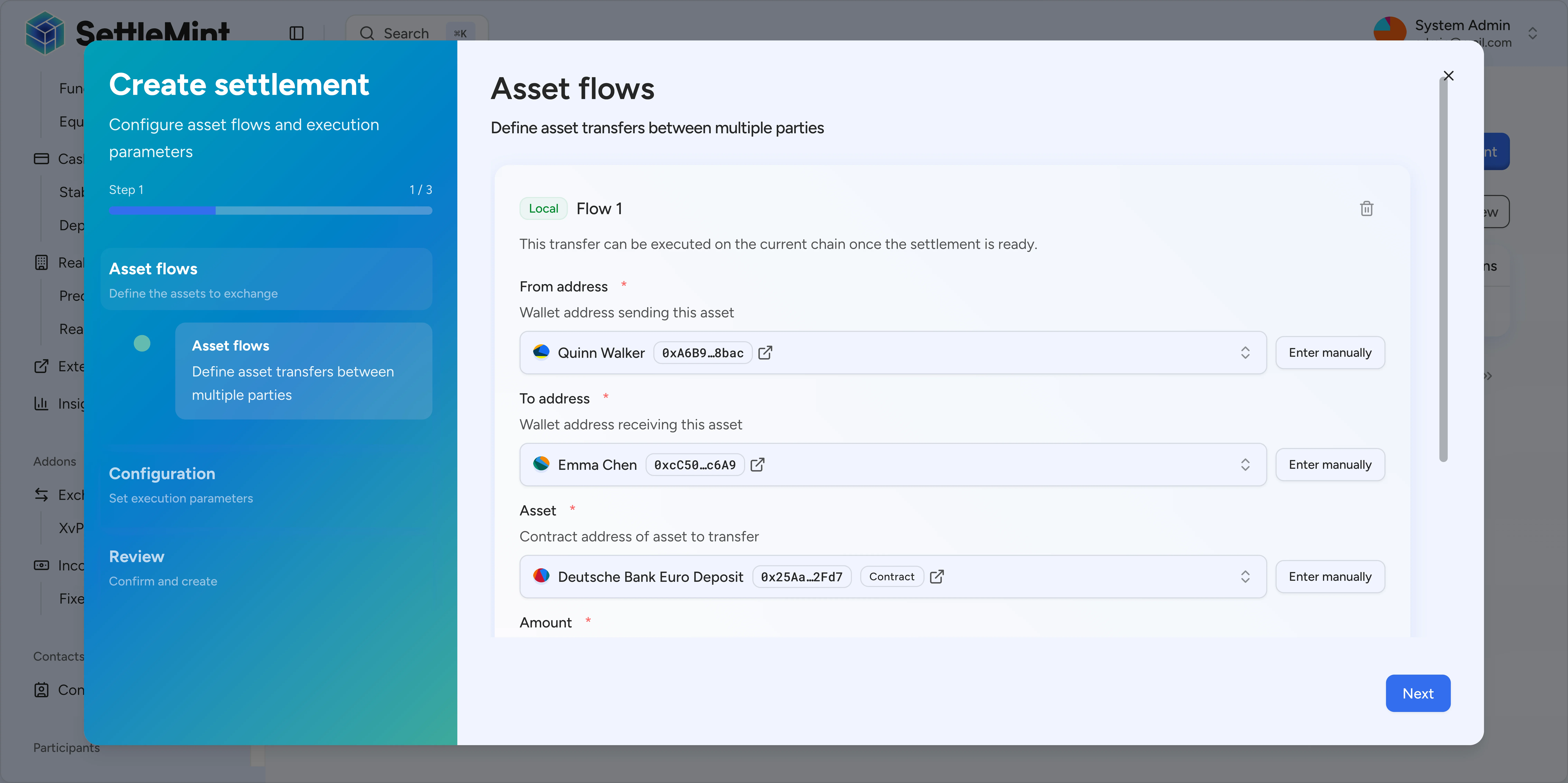
| XvP settlement | Counterparties agree to exchange assets | Atomic delivery-versus-payment across two asset legs, where both complete or neither does | XvP Addon, Compliance Layer (both legs), Settlement Engine |
How to read a flow page
Each flow page in the Flows section follows a consistent structure:
- Overview - what the flow does and why it matters
- Sequence diagram - step-by-step visual with numbered steps
- Step breakdown - detailed explanation of each step
- Failure handling - what happens when a step fails
- Related resources - links to component, security, and API documentation
Flow dependencies
All capability flows depend on the signing flow for on-chain execution and on compliance transfer logic for transfer validation. Asset issuance comes first because DAIO offerings, airdrops, treasury distributions, and XvP settlement operate on an asset that already exists.
- Signing flow - used by every flow that changes on-chain state
- Compliance transfer - used by every flow that moves tokens between addresses
- Asset issuance - prerequisite for all capability flows because an asset must exist first
- Feeds update flow - supplies validated values that contracts, adapters, APIs, and the Asset Console can read
- DAIO, Airdrop, Treasury, XvP - independent capability flows that can be configured separately on an asset
Next steps
- Flows section for full walkthroughs of each flow
- Components to understand the components referenced above
- Feeds system for feed registration, trust model, and consumer reads
- Security for how authentication and compliance enforcement work across these flows
Lifecycle after issuance
How DALP operators manage an issued asset after deployment, from the asset detail workspace through supply, transfer, pause, role, compliance, feature, and audit operations.
Glossary
Definitions of key DALP architecture terms, token standards, identity concepts, operating components, and settlement primitives.