

Private equity
Private equity fund tokenization through DALP supports LP servicing, NAV tracking, distribution processing, and compliant secondary-transfer workflows for fund units.
Who should read this: General partners, fund administrators, and investor relations teams managing institutional LP relationships.
Business value: Model fund units, track holdings and NAV, calculate distribution entitlements with on-demand claiming, and route secondary transfers through embedded compliance checks.
Business challenge
Apex Capital runs a $200 million venture fund with 80 institutional LPs. Traditional fund administration is expensive, slow, and opaque. Quarterly valuations take weeks to calculate and distribute. Capital calls and distributions require manual processing. Secondary transfers between LPs are nearly impossible due to paperwork complexity.
Traditional approach
How DALP solves it
Fund unit creation
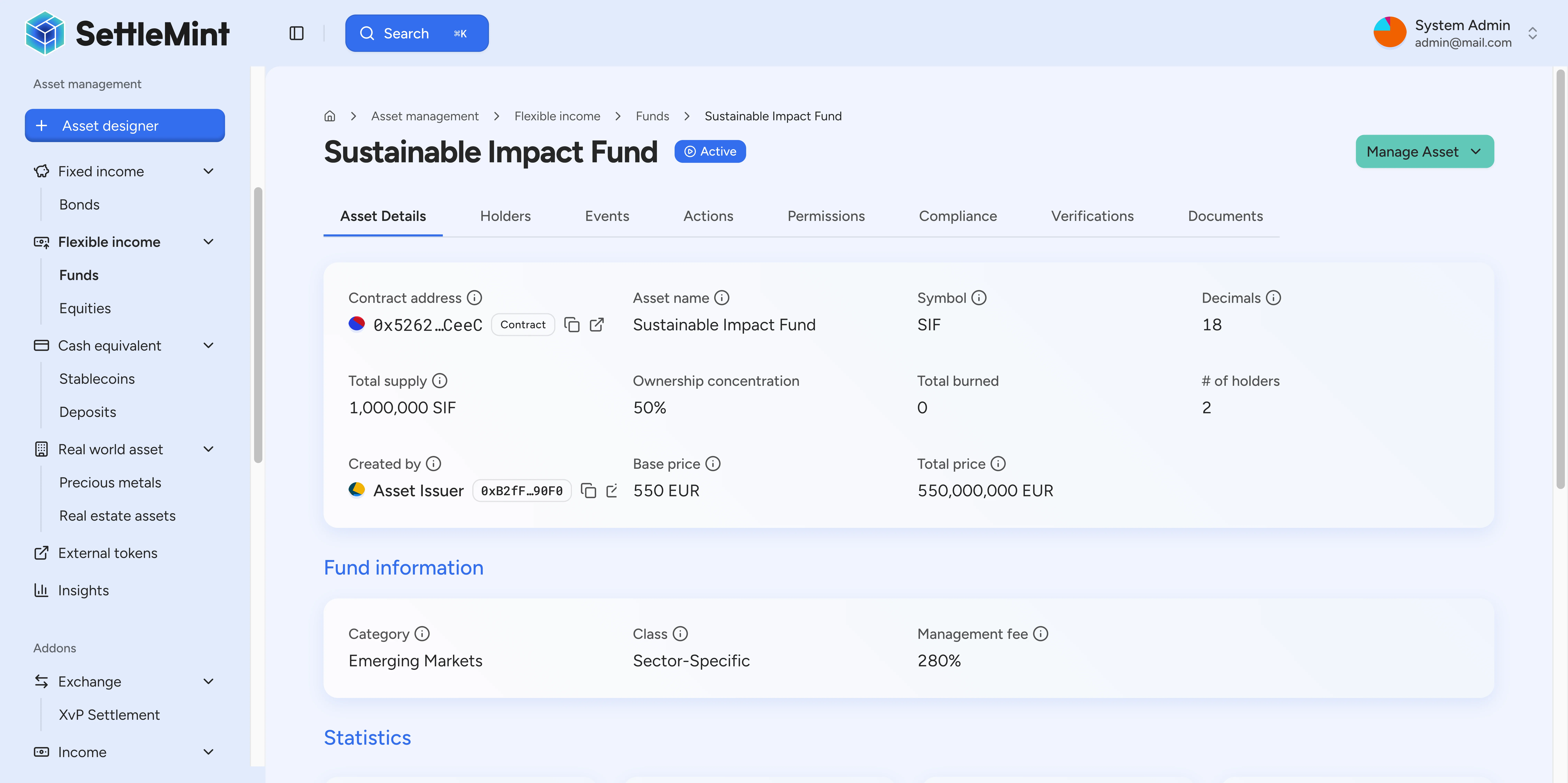
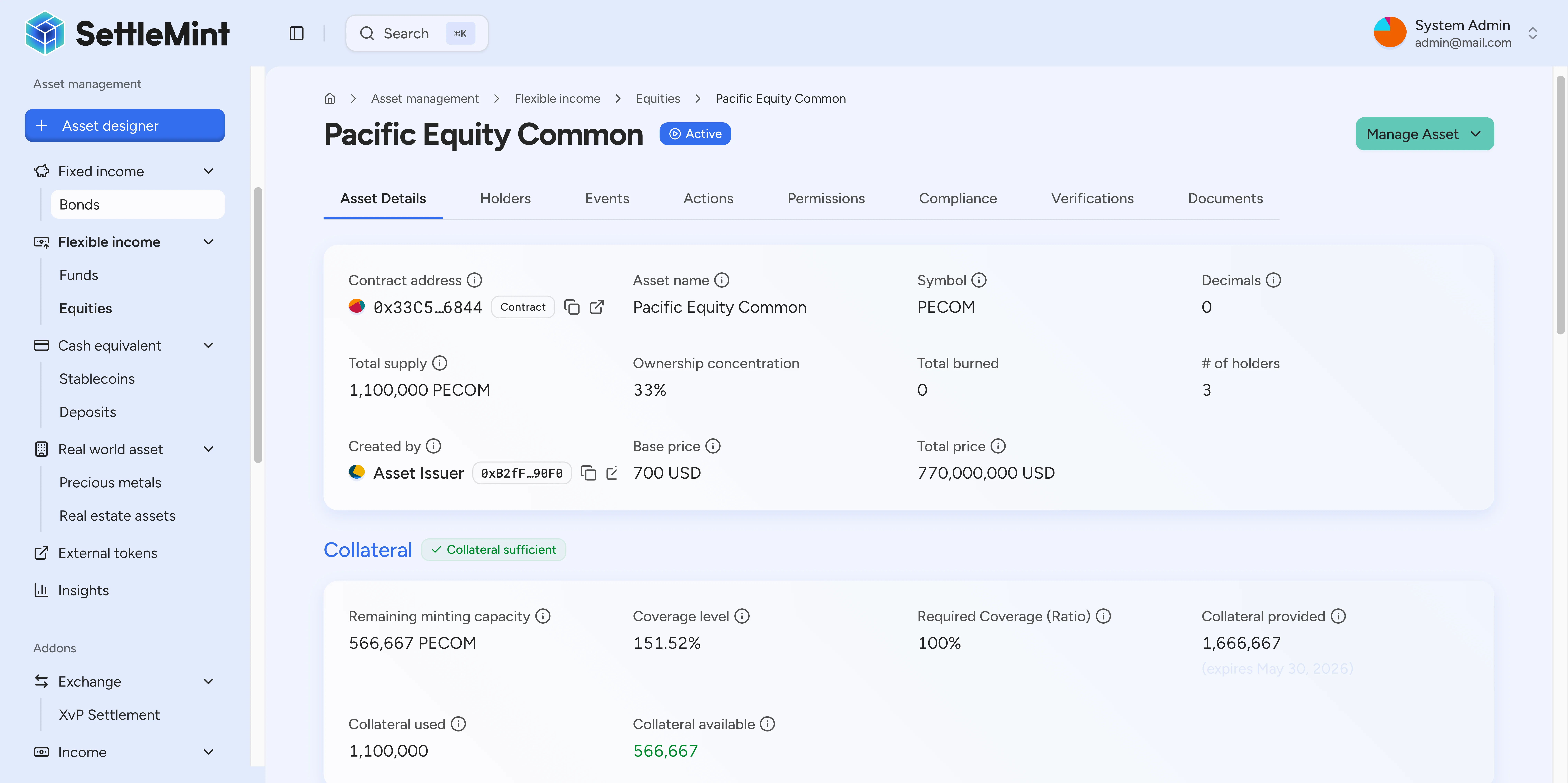
Apex tokenizes their fund structure as equity tokens representing limited partner units. Each token can carry fund-specific metadata such as investment category, fund class, and management fee parameters. Fund documents can be uploaded and linked from the token metadata so investors and operators have a consistent reference.
LP onboarding
Institutional investors complete accredited investor verification and qualified purchaser checks through the platform's identity system. Reusing verification across funds depends on the identity provider, claim configuration, and fund rules.
Subscription processing and capital tracking
When LPs commit capital, Apex issues fund tokens representing their percentage ownership. The platform tracks committed versus called capital through on-chain records.
Note: The DALP fund implementation supports proportional (pro-rata) distributions based on token holdings. Complex waterfall logic (preferred returns, catch-up provisions, carried interest tiers) requires custom addon development or off-chain calculation with on-chain distribution execution.
NAV updates and performance tracking
Monthly or quarterly, Apex updates the net asset value through the admin portal. Holders can see the latest recorded fund-unit valuation in the platform. Performance metrics such as IRR, MOIC, or quartile ranking belong in the fund administrator's reporting model unless they are configured in a connected reporting workflow.
Scheduled distributions
When portfolio companies exit or pay dividends, Apex calculates proportional entitlements for token holders. Token holders can claim tokenized distributions on-demand through the smart contract. Fiat payments and bank-wire processes remain dependent on the configured payment adapters and the fund's operating process.
Management fee collection
The AUM fee feature can calculate time-based management fees from total supply and mint the fee amount to the configured recipient. Fund administrators still need to align the configured fee rate, collection cadence, and accounting process with the fund terms.
Secondary trading among LPs
When an LP wants to exit early, the platform supports a transfer to another qualified institutional investor. Compliance checks ensure the buyer meets the configured requirements before the transfer can proceed. Transfer restrictions in the fund documents can be represented through compliance modules, approval workflows, or operational review, depending on the fund terms.
Key capabilities
| Capability | Traditional | With DALP |
|---|---|---|
| Fund administration | Quarterly fees to third-party admin | On-chain records reduce reconciliation work |
| NAV distribution | Delayed LP statements | Current recorded valuation visible in DALP |
| Distribution processing | Wire instructions and manual checks | Calculated entitlements, on-demand claiming |
| Fee collection | Manual invoicing and payment | AUM fee collection to configured recipient |
| Secondary transfers | Legal and operational coordination | Compliance-gated transfer workflow |
| LP reporting | Periodic statements | Dashboard access to current holdings |
Expected outcomes
Operational efficiency – On-chain records, configured fee parameters, and claim-based distribution workflows reduce reconciliation and manual servicing work. The exact cost impact depends on the fund's operating model and connected payment systems.
LP experience – Current holdings visibility and on-demand distribution claiming can reduce status inquiries when the fund uses the platform as its servicing interface.
Secondary liquidity – DALP can route eligible LP transfers through configured identity and compliance checks. Legal approvals, ROFR handling, and settlement arrangements still need to match the fund documents.
The diagram above shows the DALP fund lifecycle, from tokenization through configured servicing workflows to compliance-gated secondary-transfer support.
Compliance considerations
Private equity fund tokens operate under securities regulations requiring:
- Qualified purchaser verification – Enforced via OnchainID claims
- Holding periods and lock-ups – Configured via time-lock compliance modules
- Transfer restrictions – ROFR rights, limited transfer windows, GP approval workflows
- Jurisdiction controls – Investment restrictions by geography
- Audit trails – Full transaction history for regulatory reporting
For detailed compliance architecture, see Compliance & Security.
Implementation checklist
- Define fund structure (equity tokens, percentage ownership model)
- Select compliance template (qualified purchaser, accredited investor, or custom)
- Integrate KYC/AML provider for institutional LP verification
- Configure NAV update workflow and admin portal access
- Configure tokenized distribution workflow; align fiat payment handling with the selected payment adapters and operating process
- Configure AUM fee parameters and collection workflow
- Upload fund documents (LPA, operating agreement) and link to token metadata
- Deploy smart contract and conduct initial capital call
- Test distribution workflow and secondary transfer restrictions
Limitations and considerations
- Waterfall complexity – Out-of-the-box implementation supports pro-rata distributions; custom waterfall logic (preferred returns, catch-up, carried interest tiers) requires addon development
- NAV data source – NAV updates are manual entries via admin portal; integration with portfolio valuation systems requires custom API development
- Legal and regulatory review – GP and LP legal counsel should review tokenized structure for compatibility with existing fund documents and regulatory frameworks
Next steps
- Review SMART Protocol integration (ERC-3643) to understand embedded compliance
- Explore Developer Documentation for custom addon development guidance
- Contact your SettleMint representative to discuss a fund tokenization pilot
Equities
Equity tokenization through DALP enables companies to issue, manage, and service digital shares with embedded governance voting, real-time cap table management, and automated dividend distribution — replacing transfer agents, paper proxies, and manual record-keeping.
Real estate
Real estate tokenization through DALP democratizes access to institutional-quality properties while calculating rental income entitlements and maintaining compliance controls. The platform handles fractionalized ownership, expense tracking, and property governance.